I write this column three times a week, posting it in multiple places including on my personal social media pages. Because I post on my personal as well as professional pages, everything can at times run together on whether someone is posting a comment on a column or just on something I have shared. Not all of my friends are of the same political or religious persuasion and so opinions can vary.
The week before Easter was rather engaged in those comments. So imagine my surprise when I received an email from my pastor about something he had seen that gave him pause. It turned out that the post he had seen was from someone with a similar name and not from me, which he realized almost immediately after hitting send on his email. He sent a subsequent message in which he apologized. In truth, he didn’t owe me an apology as I was encouraged that he cared enough to say, “be careful”.
What he had seen, though, spoke right to some things that I had seen posted on my feed from others, things that had also given me pause because they were so far off the mark of biblical truth. Those who had shared are people I have known for years, people with whom I have worshipped in church. People I love and respect.
I have wrestled with how to handle this discussion. It is not my intention to diminish anyone in their faith. Furthermore, I am certainly no expert in theology even if my entire life has been spent in the church. At the same time, as a Christian, it would be neglectful of me to not call attention to this movement that is increasingly infiltrating our churches and leading untold numbers of people down a destructive path. I have watched hours of exposition about this movement and am sharing what I have learned in my study.
The Hebrew Roots Movement is based in a belief system that when we become Christians, we become part of the Jewish experience, being grafted into the tree as referenced by Paul in Romans chapter 11. In that passage, he likens the Jewish people as an olive tree that has had its branches cut due to unbelief. It describes the Gentiles, non-Jewish believers in Jesus, as being grafted into the tree. What he is referencing here is not that Christians become like the Jews but that God’s grace has been extended to us.
This movement is not a monolith. There is no centralized leader or doctrinal statement. It is an amalgamation of beliefs that range from the very basic Sacred Names to extreme beliefs about end times prophecies, with gradations across the spectrum.
The things that I saw began small- using the name “Yahweh” for God and “Yeshua” for Jesus. This is the Sacred Names belief that translations have diminished the true name of God. They further believe that the English translation of Jesus is inaccurate and even blasphemous. If they write the English version, they will often eliminate the vowels so as not to entertain a false name.
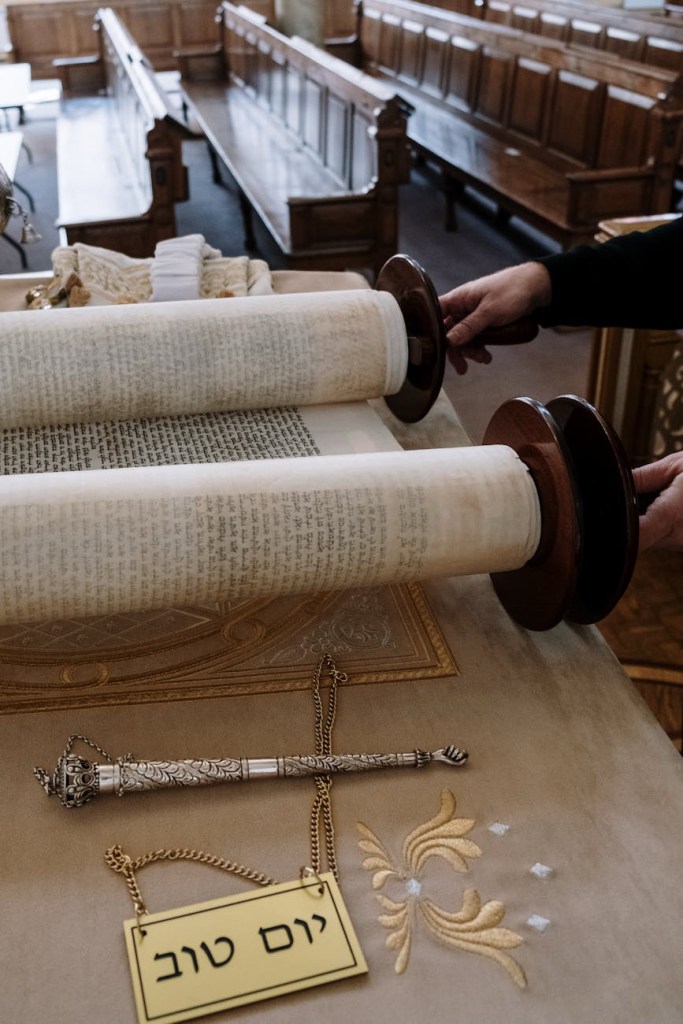
The main tenet of HRM is that even though we are Christians, we are still obligated to follow the Levitical feasts and are still subject to the law. The adherence to this is, again, subject to varying degrees. There is nothing inherently wrong with a Christian celebrating Passover. I myself have taken part in a Passover Seder and found it to be a moving experience, especially in light of the symbolism that points to Jesus. Most of the feasts can legitimately no longer be practiced because they require a tabernacle, a levitical priest, and a blood sacrifice. Followers of this movement see following these feasts as a demonstration of the commitment to a walk of faith.
As for the adherence to the law, the Jerusalem Council of Acts 15 was a meeting of the disciples to determine if the early Christians would be expected to follow the traditional Jewish law of the Torah. Their determination was that the Christians were under the grace bought by the once and final sacrifice of Jesus on the cross. There were additional provisions for dietary laws that I will go into for my next column.
The issue is not only in the faulty belief that we must follow a system of laws that was designed in such a way that only one man was able to fulfill every tenet- that man being Jesus- but in the use of such systems to judge others in their walk with God.
I’m going to get personal here for a minute. My son is adopted into my family. He follows my rules as a part of my family. But my love for him is not determined by how well he follows those rules. I love him regardless. In Ephesians 1 and Romans 8, the Bible says we are adopted by God as his “sons”. He chose us and we chose him. Our obedience is because of our love for him as my son’s obedience is out of his love for me, not as a mandate of laws that must be followed for your salvation and sanctification.
In looking to our beliefs, we must first ask if it lines up completely with scripture. If it in any way subtracts or adds to that scripture, it is a path we need not walk. In everything we see, hear, and believe, we must examine it critically, asking ourselves it follows scripture. If it fails in that test, it is best if we walk away.
 No.Nonsense.
Leave a comment